Alaska by Water: The Fjords You Can’t Reach Any Other Way
You can drive a lot of Alaska. You can fly into Juneau, rent a car in Anchorage, take the train to Denali. What you cannot do is drive to Glacier Bay, Tracy Arm, or Misty Fjords, because no road reaches them and none ever will. Every one of these places sits at the end of a long saltwater inlet walled in by rock, and the only way in is by boat or floatplane.
That geography is the reason so much of Alaska’s best scenery shows up only on itineraries built around water. Scenic cruising days on Alaskan cruises exist precisely because these inlets have no shoreline access, no trailhead, and no parking lot. Below is what is actually in each of the main fjords, how access works, and what to plan for so you are not stuck inside when the ship turns into the ice.
Glacier Bay National Park
Glacier Bay is the headline, and it is genuinely roadless. There is no road connection to the park headquarters at Bartlett Cove, and visitors arrive by boat or small plane from Juneau.
The bay branches into several inlets, with the Margerie and Grand Pacific glaciers at the head of Tarr Inlet drawing most of the attention. Johns Hopkins Inlet is more dramatic but has seasonal restrictions to protect harbour seals during pupping season, so early-summer visits may see it from a distance only.
How Access Is Controlled
The National Park Service limits how many vessels enter the bay each day under a permit system, which is why not every Alaska itinerary includes Glacier Bay. If it matters to you, check the itinerary wording before booking, because “Inside Passage scenic cruising” is not the same thing. Current park information is published by the National Park Service.
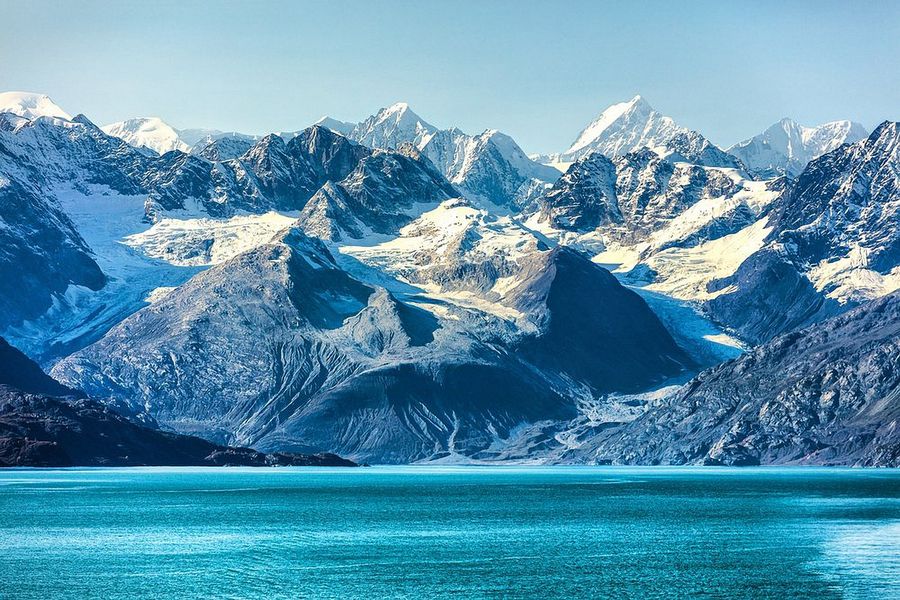
exploring Alaska by water
What Actually Happens On Board
Park rangers and, on many sailings, a Huna Tlingit cultural interpreter board the ship in the morning and stay for the day. They narrate over the ship’s PA and set up in a lounge to answer questions. Their commentary is the difference between looking at grey ice and understanding what you are seeing, so find out where they are stationed early.
Tracy Arm and Endicott Arm
South of Juneau, Tracy Arm cuts more than 30 miles inland between granite walls that rise straight out of the water, ending at the twin Sawyer glaciers. Endicott Arm, the neighbouring inlet, leads to Dawes Glacier.
These two are the most weather-dependent stops in Southeast Alaska. A shallow bar at the mouth of Tracy Arm and drifting ice inside it can make the passage impractical for larger vessels, so ships frequently substitute Endicott Arm at short notice. Treat any Tracy Arm listing as a plan rather than a guarantee, and do not build the trip around it.
Both inlets are narrow enough that you see waterfalls, hanging valleys, and seals hauled out on ice floes at close range, often before you reach the glacier itself. The scenery on the way in is the point, not just the ice at the end.
Misty Fjords National Monument
East of Ketchikan, Misty Fjords is a wilderness of sea cliffs, freshwater lakes, and inlets carved into the Tongass National Forest. Rudyerd Bay and the volcanic plug known as New Eddystone Rock are the recognisable landmarks.
Big ships do not enter Misty Fjords. Access is by floatplane or small excursion boat out of Ketchikan, both of which run as half-day trips. The floatplane option lands on a lake inside the monument, which is the fastest way to see it if your port call is short. Boat trips take longer but put you at water level, which suits anyone uneasy about small aircraft.
Rain is the defining feature here. This is temperate rainforest with heavy annual rainfall, and low cloud is normal rather than unlucky. Flights cancel regularly, so book for the earliest slot in your port day and keep a backup plan.
Kenai Fjords and Prince William Sound
If your itinerary starts or ends in Seward or Whittier, two more fjord systems open up on the Gulf of Alaska side.
Kenai Fjords National Park, reached from Seward, has almost no road access beyond Exit Glacier. Aialik Bay and Northwestern Fjord are boat-only, and day cruises from Seward harbour run through the summer. Wildlife density is the draw here, with puffins, sea otters, Steller sea lions, and humpbacks common along the route. Park details and boat access information are on the Kenai Fjords park site.
Prince William Sound, reached from Whittier, contains College Fjord, where a line of tidewater glaciers sits along one inlet. Northbound and southbound Gulf of Alaska itineraries often pass through it on the final or first evening, which can mean late viewing hours in midsummer daylight.
Planning the Water Days Properly
Scenic cruising days work differently from port days, and a few decisions made in advance change the experience considerably.
- Skip the balcony assumption: Which side faces the glacier depends on how the captain positions the ship, and most vessels rotate through 360 degrees at the glacier face so both sides get a turn. Open deck space matters more than cabin side.
- Dress for the water, not the forecast: Air coming off a tidewater glacier is significantly colder than the same day in port, and standing still on a moving ship adds wind chill. A windproof outer layer and gloves are more useful than a heavy coat.
- Eat early: Deck space fills up as the ship approaches the ice. Eating before the approach rather than during it is the simplest way to get a rail position.
- Bring binoculars: Scale is deceptive in the fjords. Ice faces that look close are often a mile away, and wildlife on the floes is easy to miss without magnification.
- Watch for calving cues: Cracking sounds usually precede a calving event by a moment or two, so keep your camera ready rather than filming constantly.
If Your Itinerary Skips a Fjord
Not every sailing includes Glacier Bay, and not every port day lines up with the weather. Day cruises from Juneau reach Tracy Arm independently, floatplanes leave Ketchikan for Misty Fjords, and boats out of Seward cover Kenai Fjords. The Alaska Marine Highway ferry system also runs through much of the Inside Passage if you are extending your trip on land.
Final Thoughts
The fjords are the part of Alaska that cannot be replicated by a rental car or a land tour, because there is physically no way in except across water. Check which inlets your itinerary actually enters, accept that ice and weather will rearrange some of it, and plan your clothing and deck position around the glacier hours rather than the dining room schedule.