Niagara Falls Boat Cruise: Everything You Need to Know Before You Go
The Niagara Falls boat cruise is the one attraction that visitors who skip it almost always regret. It is also the one that generates the most questions before a trip, largely because people cannot quite picture what being at the base of Horseshoe Falls by water actually means until they are there. This guide covers everything worth knowing before you go, including what the experience is genuinely like, when it runs, what to wear, and how to avoid the situations that cause the most frustration on the day.
What the Boat Cruise Actually Is
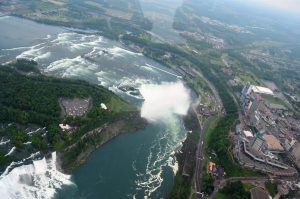
The Niagara Falls boat tour is operated by Niagara City Cruises and departs from the Canadian side of the falls, near the base of Clifton Hill. The boats are large, double-decked catamarans that carry several hundred passengers at a time. Each cruise lasts approximately 20 minutes and follows a route that moves from the American Falls along the base of the gorge toward Horseshoe Falls, approaching close enough that the noise and mist become overwhelming before the boat holds position briefly and then turns back.
The experience is straightforward to describe and genuinely difficult to prepare for. Horseshoe Falls from water level is enormous in a way that photographs at any angle do not capture. The sound reaches you before the boat is close, and the mist hits well before the falls themselves come into full view. Most visitors have their camera out before the boat has turned back. Many of the best photographs are taken in the few seconds when the boat is closest to the falls and everyone on deck is simultaneously soaked and amazed.
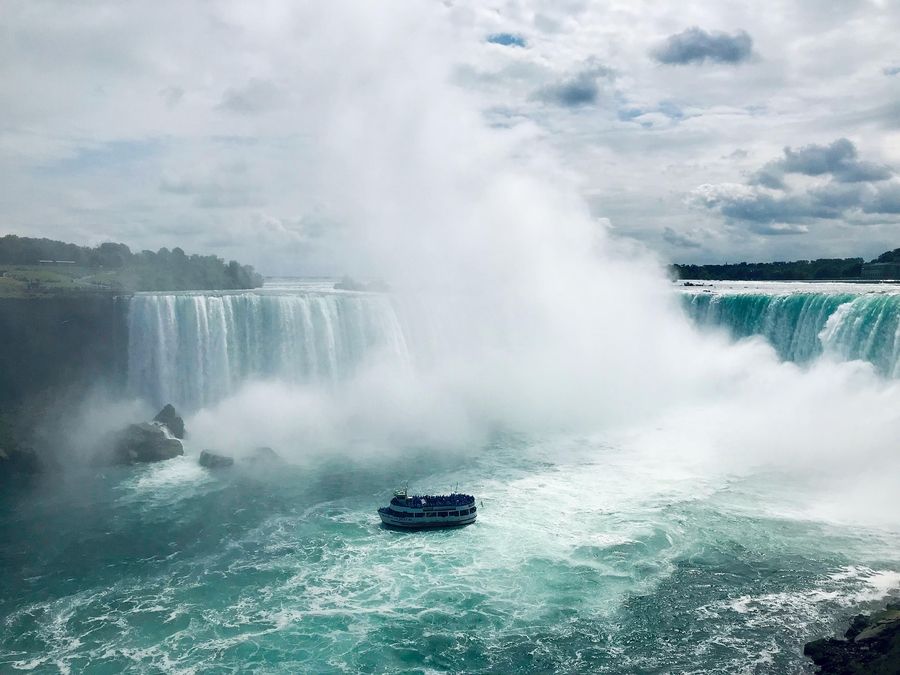
Niagara Falls Boat Cruise
When It Runs
The boat cruise operates seasonally. It typically opens in late April, subject to ice and water conditions in the gorge, and closes for the season in late November. The exact dates vary year to year depending on conditions, so visitors planning a trip in April or November specifically for the boat should check current operating dates before finalising plans.
From late November through to late April, the boat cruise is replaced by Niagara Takes Flight, an indoor aerocar attraction that offers a different kind of aerial perspective on the gorge and whirlpool. It is a worthwhile experience in its own right, but it is not a substitute for the boat. Visitors who want the water experience should plan their trip within the operating window.
During peak summer, the first departure of the day is typically around 9 AM. The last departure varies by season but generally runs until early evening. In shoulder months like May and October, the operating hours are shorter.
The Mist: What Getting Wet Actually Means
Ponchos are provided to all passengers before boarding, and the crew is emphatic about putting them on before the boat leaves the dock. This is good advice. The ponchos cover from the shoulders to roughly the knee and have a hood. They are effective at keeping your upper body and core dry.
What they do not cover is your legs below the knee and your shoes. On the upper deck of the boat, particularly during the approach to Horseshoe Falls, the mist is heavy enough that your lower legs will be genuinely wet by the time the boat turns back. In summer this is a minor inconvenience. In a cooler month like May or October it is worth wearing waterproof footwear and considering whether you want to be in shorts.
The lower deck of the boat is partially enclosed and gets less direct mist, but the view is significantly less impressive. Most visitors choose the upper deck and accept the trade-off.
Best Position on the Boat
This is one of the questions guides at the falls are asked most often, and the honest answer is that it depends on what you want from the experience. The front of the upper deck faces the falls directly and gets the most mist. You will be very wet. The photographs from the front of the upper deck, particularly during the closest approach to Horseshoe Falls, tend to be the most dramatic.
The sides of the upper deck offer a slightly different angle and somewhat less direct mist. The rear of the upper deck is the driest option while still being outside. If you are travelling with young children or want to keep a camera relatively dry, the sides or rear give you more control without sacrificing the outdoor experience entirely.
Arriving early gives you more choice of position. The boat fills from the front, so passengers who board later tend to fill in toward the back and sides.
Queue Times and How to Manage Them
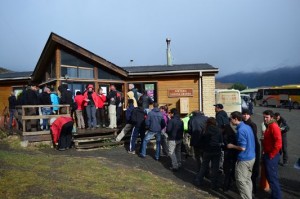
Walk-up queue times at the Niagara City Cruises dock are one of the most significant logistical issues for independent visitors during peak season. In July and August, weekend queues from opening time can be 45 minutes to over an hour by mid-morning. By early afternoon on a busy Saturday, the wait from the end of the walk-up queue to boarding can exceed 90 minutes.
There are two practical ways to avoid the worst of this. The first is to arrive early. The queue is shortest in the first hour of operation, before the bulk of day visitors from Toronto have arrived. If you are driving yourself and can be at the falls by 9 AM, the difference in queue length compared to 11 AM is often more than an hour.
The second is to book skip-the-line access in advance. Visitors joining a Niagara Falls day tour from Toronto typically have the boat cruise included with priority boarding, which eliminates the queue entirely and allows the boat experience to happen at the right point in the day rather than whenever the walk-up line clears.
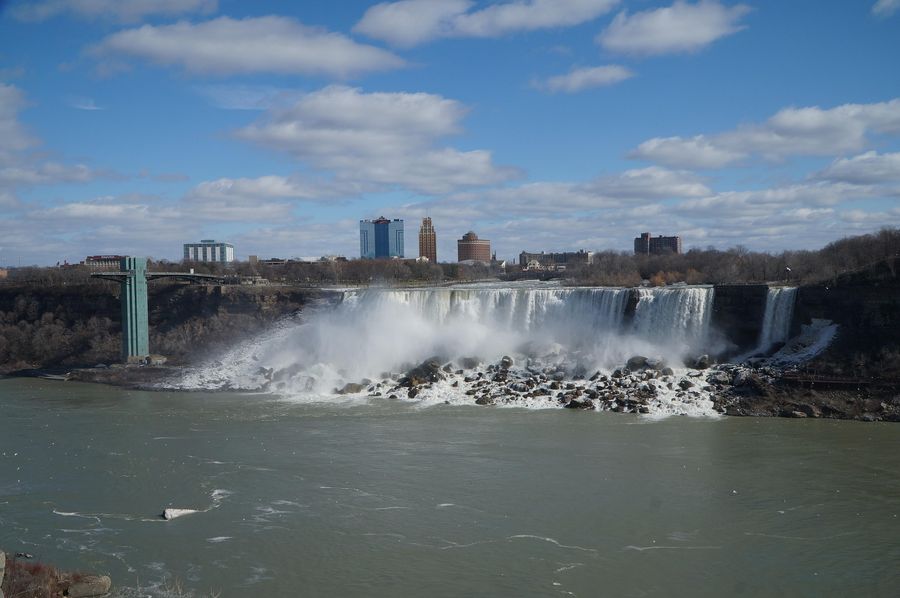
Niagara Falls view
Cost
Walk-up pricing for the Niagara City Cruises boat tour is approximately C$32 for adults and around C$20 for children, with some variation by season. These prices are subject to change, so checking the current rates directly is advisable before planning your budget for the day.
When the boat cruise is bundled into a guided tour package from Toronto, the per-person cost of transport plus the boat access is often comparable to or better than paying separately for a return bus or rideshare trip and walk-up boat tickets. The practical convenience of not managing separate bookings and queue times is an additional consideration beyond the price.
Traveling with Children
The boat cruise is one of the strongest experiences at Niagara Falls for children, particularly those between roughly five and twelve years old. The combination of mist, ponchos, the noise of the falls, and the physical proximity to the water tends to produce a reaction that photographs and descriptions simply do not replicate. Many children find the approach to Horseshoe Falls the most genuinely exciting few minutes of a Niagara Falls visit.
Very young children and infants require more consideration. The noise at close range is significant, and some children under three find it distressing rather than exciting. The mist and cold are also more of a factor for younger children. If you are travelling with a child under three, the outdoor observation deck at Table Rock gives a comparable sense of the falls’ scale without the noise intensity of the boat’s closest approach.
Strollers and pushchairs can be left at the dock before boarding. Life jackets are available for small children.
Is It Worth It for Return Visitors
This question comes up often, and the answer is generally yes, with one qualification. The boat cruise is not a static experience that becomes less impressive the second time around. The falls change with the seasons, the water volume fluctuates, and the experience of being at water level at the base of Horseshoe Falls does not diminish meaningfully with familiarity.
The qualification is that return visitors who have already done the boat cruise in summer and are considering a different kind of visit, perhaps an evening trip for the illumination and fireworks, may find that an evening tour of Niagara Falls offers more that is genuinely new compared to a repeat daytime excursion. The boat cruise does not run in the evening, so the evening tour experience is built around the surface viewpoints, the Illumination Tower, and the fireworks rather than the water.
A Few Things Worth Knowing Before You Board
The boat does not touch the falls. It approaches to within approximately 10 metres of the base of Horseshoe Falls and holds position briefly before turning back. There is no contact between the boat and the waterfall.
Photography on the boat is possible but requires some preparation. A phone in a waterproof case or a camera with a weather-sealed body handles the conditions well. Standard cameras without weather sealing can be damaged by the mist at close range. Many visitors find that their best photographs from the boat come during the approach rather than at the closest point, when the falls fill the frame from a slightly more manageable distance.
Boarding is from a dock at the base of a long staircase from the main falls viewing area. The walk down to the dock takes several minutes and involves a significant descent. The return walk back up is the same distance in reverse. Visitors with mobility considerations should factor this into their planning, as the dock area is not directly accessible from the surface without using the stairs or a funicular that operates nearby.
For visitors planning a full day at the falls that takes in multiple experiences, Niagara Falls tours from Toronto that bundle transport and attraction access are worth comparing against the cost and logistics of arranging everything independently, particularly during the summer months when queue management makes the biggest difference to how much of the day is actually spent at the falls versus waiting in lines.
Frequently Asked Questions
Do you have to wear the poncho on the boat?
You are not required to, but you should. Without a poncho on the upper deck during the approach to Horseshoe Falls, your upper body will be significantly wet by the time the boat turns back. The crew distributes ponchos before departure precisely because the mist at close range is more intense than most visitors anticipate.
How close does the boat get to the falls?
The boat approaches to within approximately 10 metres of the base of Horseshoe Falls at its closest point. At that distance, the falls fill the entire field of vision and the sound and mist are at their most intense.
Can you do the boat cruise in the evening?
No. The boat cruise operates during daylight hours only and does not run as part of an evening visit. The last departure is typically in the early evening, before the illumination begins. Visitors specifically interested in the evening experience at the falls should plan for the surface viewpoints and the Illumination Tower rather than the boat.
What happens if the boat cruise is sold out when I arrive?
Walk-up capacity is limited and the boat does sell out on busy summer days. Visitors who arrive to find it sold out for the day have limited options beyond returning the following morning. Booking in advance, either directly through Niagara City Cruises or as part of a guided tour package that includes priority access, is the only reliable way to avoid this outcome during peak season. Niagara Falls might be one of the key reasons to visit Canada, don’t you think?